
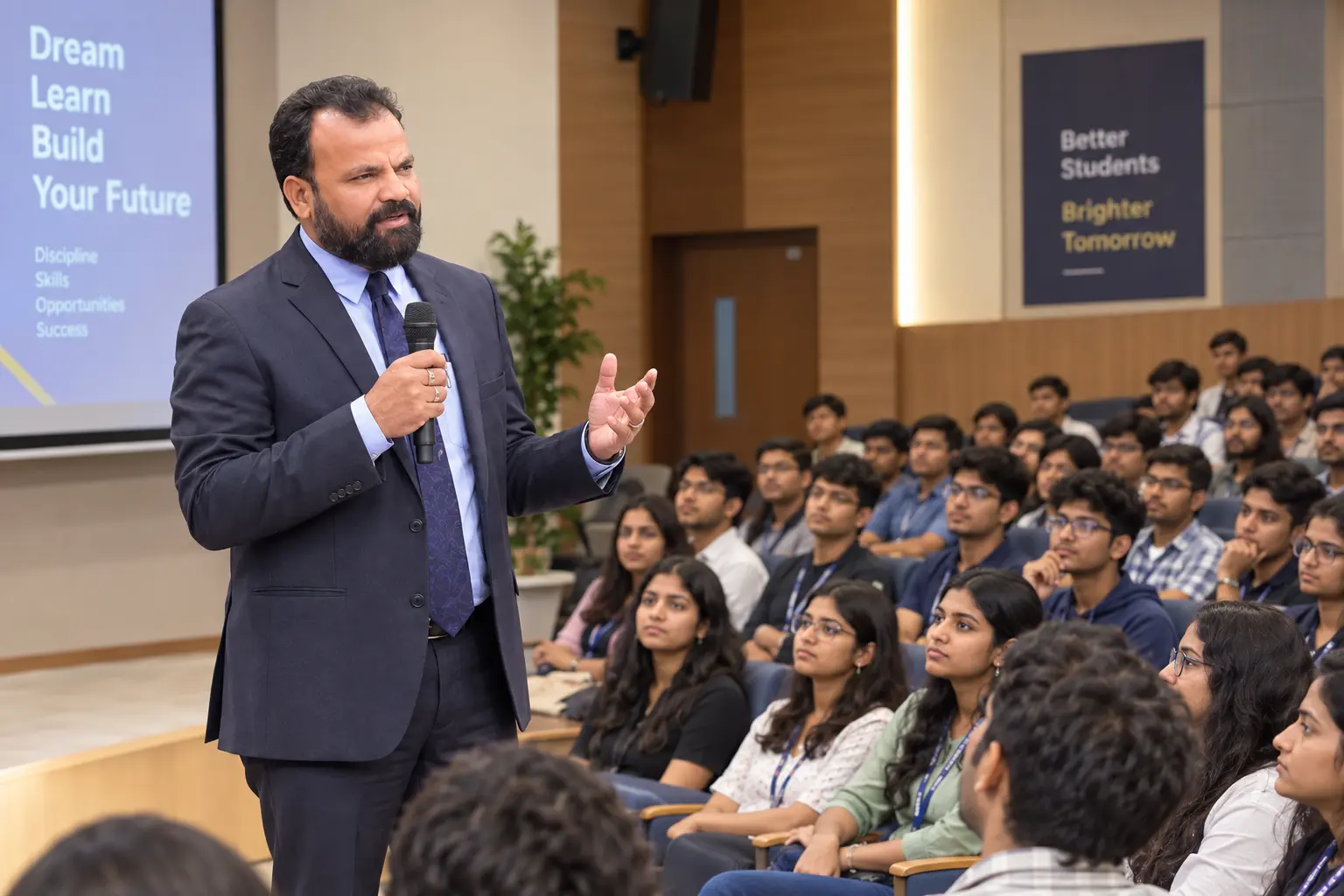
Today’s young people carry more pressure than almost any generation before them. Career choices arrive faster, comparison feels constant, and information is available everywhere — yet clarity is not. Exam results, career decisions, and social comparison can all feel overwhelming at once, especially when the “right answer” seems to change every few months.
A good youth motivational speaker in India helps students and young professionals cut through this noise. The goal isn’t a few minutes of excitement on a stage. It’s real clarity that lasts long after the applause fades. Dileep Yashvardhan, a life management coach and corporate trainer who has worked with school and college audiences across India, builds his youth sessions around a simple philosophy: “समझोगे तो काम आएगा” — once you truly understand something, you know how to use it. This idea shapes everything in this guide, from what a speaker for young audiences actually does to how institutions can choose the right one.
What Does a Youth Motivational Speaker Do?
A youth motivational speaker helps young people understand their challenges, build genuine confidence, and think clearly about their next steps. The role goes well beyond delivering an energetic speech for forty-five minutes. It involves helping a young audience see their situation more clearly and decide, on their own, what to do next.
A well-designed session usually helps young people to:
- Recognise the real challenge behind a problem, not just its symptoms
- Build genuine self-confidence instead of temporary excitement
- Think seriously about purpose and long-term direction
- Make more responsible, informed decisions
- Approach failure as useful feedback rather than proof of inadequacy
- Move from simply feeling inspired to actually taking action
A speaker who stops at “feel good” messaging rarely creates lasting change. Within a week, the energy fades and the same confusion returns. The real value comes when young people leave with more clarity than they had when they walked in — not just louder applause. That is the standard Dileep Yashvardhan works toward in every session for youth and students.
Motivation vs. Understanding — Why Young People Need Both
Most motivational content focuses only on energy. It tells young people to work hard, dream big, and never give up. This can help for a day or two. But energy alone rarely answers the harder questions a young person is actually facing.
Motivation Creates Energy
Motivation can push someone to start something new — join a course, apply for an opportunity, or try again after a setback. It works well as a spark. On its own, though, it rarely survives the first real difficulty, because it was never designed to explain what to do when things get hard.
Understanding Creates Direction
Understanding is different. It helps a young person answer questions that motivation alone cannot: What exactly am I trying to do? Why does this actually matter to me? Is this choice right for my own situation? What should I do next? How should I respond when things don’t go as planned?
These questions matter more than another dose of inspiration. Once a student understands their situation, they can make decisions that fit their own life — not just advice borrowed from someone else’s journey.
Here’s a simple way to see the difference:
Motivation | Understanding | |
What it gives | Short-term energy | Long-term direction |
How long it lasts | Days, sometimes hours | Stays with the person |
What it answers | “Go do it” | “Why, what, and how” |
Best for | Starting something new | Deciding what’s right, and continuing after setbacks |
The Goal Is Clarity, Not Temporary Excitement
Dileep Yashvardhan’s approach to youth motivation follows a simple sequence: Motivation and Understanding lead to Awareness. Awareness leads to Better Decisions. Better Decisions lead to Meaningful Action. This is the real difference between “समझोगे तो काम आएगा” and a one-time pep talk. Understanding stays with a young person long after the excitement of the event has faded.
Common Challenges Faced by Today’s Youth
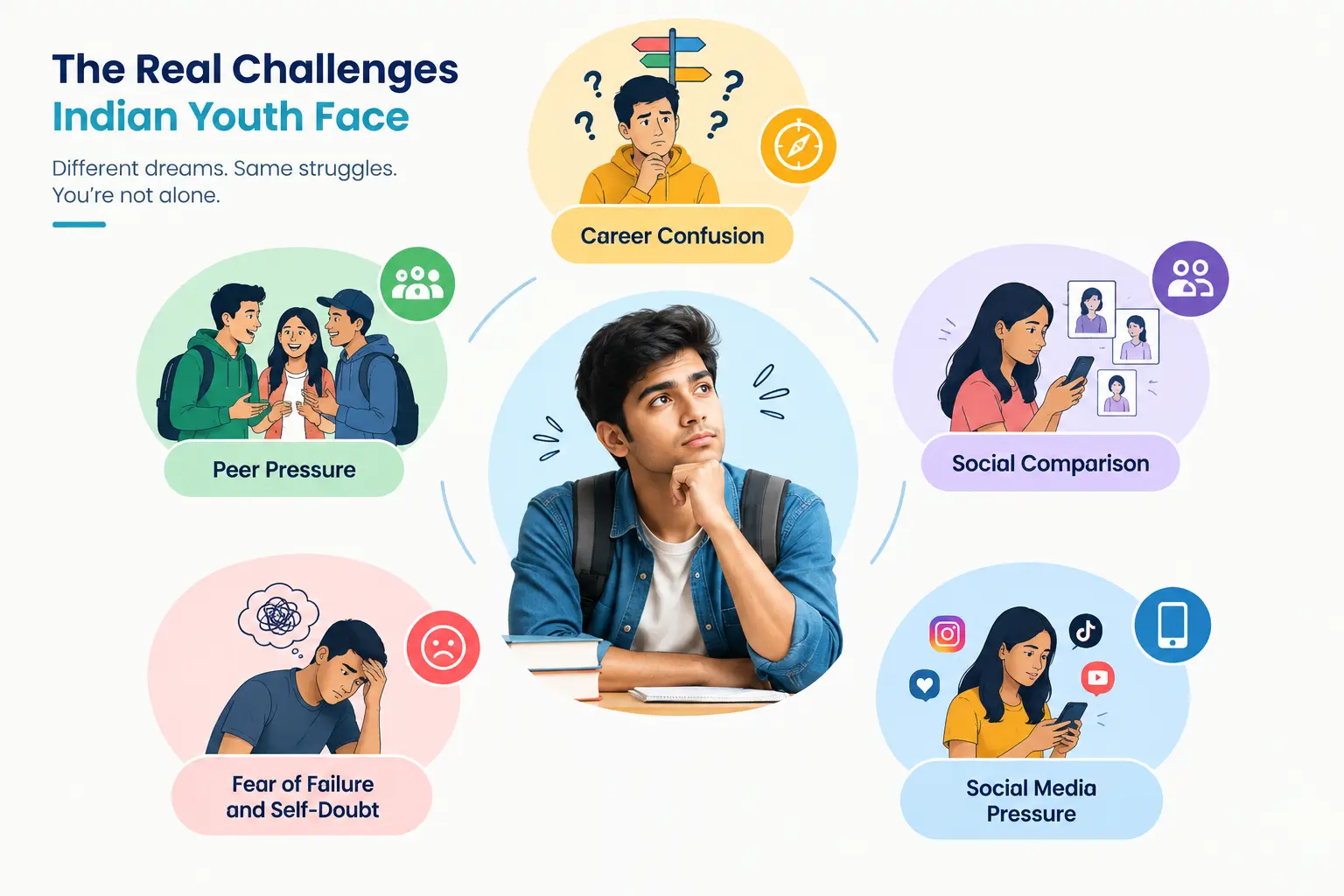
Every generation faces pressure, but today’s youth deal with a particular mix of speed, comparison, and constant connectivity. A few challenges come up again and again across schools, colleges, and youth programs in India.
Career Confusion and Lack of Direction
Many students choose a stream or course under family or peer influence rather than personal clarity. This usually happens because nobody has helped them connect their actual strengths and interests to real options — so even students who “do everything right” on paper still feel lost. Understanding one’s own aptitude, rather than following a well-worn path, is what usually resolves this.
Peer Pressure and Social Comparison
Constant comparison with classmates, friends, and social media feeds creates pressure to keep up rather than grow at one’s own pace. This usually comes from measuring progress against someone else’s timeline instead of one’s own. Once a young person understands that everyone’s starting point and pace are different, the pressure to match someone else’s journey naturally eases.
Fear of Failure and Self-Doubt
Many young people avoid trying new things because failure feels like proof that they aren’t good enough. This happens when a single setback gets treated as a verdict on ability rather than one data point among many. Understanding that failure is information, not identity, changes this pattern over time.
Social Media and Digital Pressure
Curated online lives make ordinary struggles feel abnormal. Seeing only the highlight reel of other people’s lives creates a distorted sense of what “normal” progress looks like. A clearer sense of self-awareness reduces much of this pressure, because comparison naturally loses its grip once a young person understands their own path.
Difficulty Making Important Decisions
Career choices, relationships, and life direction can all feel overwhelming without a framework to think them through. This usually isn’t a shortage of information — many young people already have more information than they can use. What’s missing is a way to filter it. Structured understanding can help them make sense of that information and decide what matters for their situation.
Losing Motivation After Setbacks
A single failure or rejection can stop momentum completely when a young person doesn’t understand why the setback happened or what to adjust next time. Without that understanding, the natural response is to stop trying rather than to adjust and continue.
These challenges rarely need more motivation. They need a young person to understand what is actually happening — and what they can realistically do about it.
How a Youth Motivational Speaker Can Help
Once a young person understands their situation more clearly, real change becomes possible. This is where a youth motivational speaker’s role shifts from inspiration to practical guidance.
A well-structured session helps young people to:
- Build genuine self-confidence based on self-awareness, not slogans
- Develop self-belief that holds up outside the auditorium
- Find a clearer sense of purpose and direction
- Make decisions based on understanding rather than pressure
- Approach failure with a constructive, learning-focused mindset
- Build practical life skills they can use immediately
- Turn new understanding into small, consistent actions
The shift from “I feel motivated” to “I know what to do next” is the real marker of a good youth inspirational speaker. For example, a student unsure about which career path to choose rarely needs to hear “follow your passion.” They need help understanding their own interests, strengths, and realistic options — and then deciding with more confidence.
As a youth empowerment speaker in India, Dileep Yashvardhan designs every session to end with this kind of clarity, not just applause. The measure of success isn’t how energised the room feels at the end. It’s whether students walk out with a clearer next step than when they walked in.
Youth Motivational Speaker for Students and College Students
Students and college students make up a large part of the audience for any youth motivational speaker in India, and each group faces slightly different pressures.
Motivational Speaker for Students
School and early-college students often deal with academic pressure, exam stress, and uncertainty about their future. An inspirational speaker for students typically focuses on building confidence, easing decision-making around subjects and courses, helping students handle failure without losing momentum, and encouraging steady personal growth instead of last-minute panic before exams or results. Many schools specifically look for a student motivational speaker in India who understands the local academic and cultural context, rather than a generic, imported program.
Motivational Speaker for College Students
College students face a different stage of the same underlying problem. A motivational speaker for college students in India usually addresses career uncertainty, growing independence, peer and social pressure, and the shift from academic life to real-world responsibility. For many, this is the first time they must make major decisions without constant guidance from parents or teachers.
Why College Students Need More Than Motivation
Whether the audience is in school or college, the same pattern holds. A college motivational speaker who offers only excitement leaves students without any real tools for the decisions ahead. This is exactly where understanding — of one’s own strengths, limits, and realistic options — carries the message far beyond the event itself, into the choices students actually make afterward.
What to Look for in a Youth Motivational Speaker
Choosing the right speaker matters as much as the topic itself. A few practical points help when evaluating a youth motivational speaker in India for a school, college, or organisation:
- Genuine experience working with young audiences, not just corporate crowds
- Ability to understand and relate to the specific age group and background
- Use of practical, real examples instead of generic inspirational quotes
- A clear focus on building confidence and clarity, not just excitement
- Comfort connecting naturally with students and young professionals
- A defined philosophy or approach, rather than a collection of borrowed ideas
- A focus on long-term change over a short burst of stage energy
A speaker who checks most of these points is far more likely to leave a lasting impact than one who simply delivers a well-rehearsed, generic talk built around applause lines.
Dileep Yashvardhan’s Approach to Youth Motivation
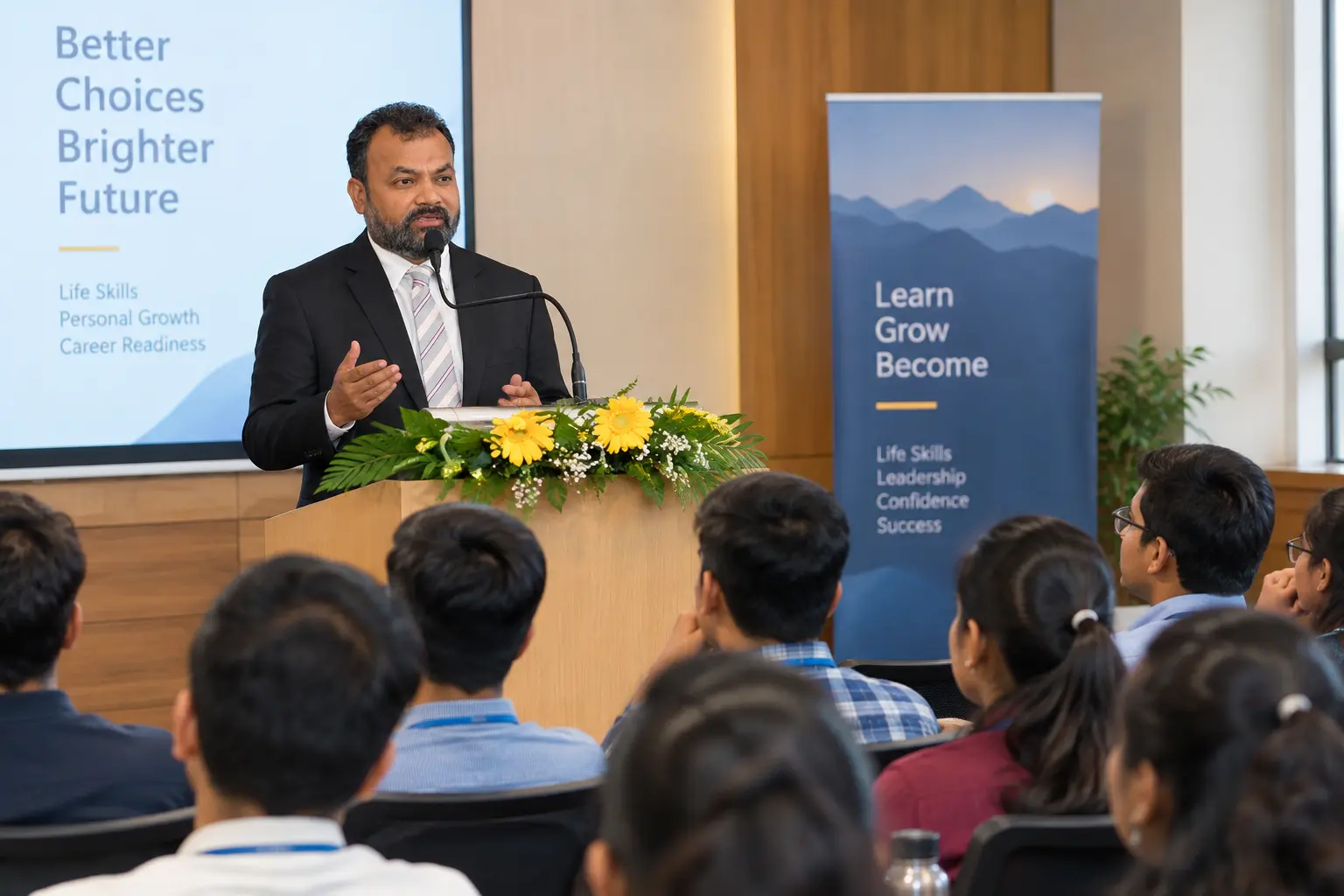
Dileep Yashvardhan’s youth sessions are built around one core belief: understanding creates change that motivation alone cannot.
Understanding Before Motivation
His guiding philosophy, “समझोगे तो काम आएगा,” means that once you truly understand something, you know how to use it. Rather than pushing young people toward instant excitement, Dileep Yashvardhan helps them understand their own choices, situations, and patterns first — before offering direction. This approach draws directly from his broader work on motivation vs. understanding, applied specifically to a younger audience.
From Awareness to Action
This approach follows a simple, repeatable process: Understand, Reflect, Decide, Act, and Improve. Each step builds on the one before it, so a young person moves from confusion to a clear next action, rather than a temporary boost of energy that fades within a few days.
Helping Young People Develop Maturity
Beyond confidence and direction, these sessions focus on building real maturity — handling failure without falling apart, taking responsibility for choices, understanding consequences, and making conscious decisions instead of reactive ones. These same principles run through Dileep Yashvardhan’s broader coaching work in individual transformation and life management skills, applied here specifically for a younger audience.
For young people ready to move beyond generic motivation, this understanding-first approach offers something more durable: the ability to think clearly and act with purpose, long after any single session ends.
Who Can Benefit From These Sessions
A speaker working with young audiences in India typically works with a wide range of groups, including:
- School and college students
- University students preparing for the workplace
- Young professionals early in their careers
- Young entrepreneurs building something new
- Youth organisations and community groups
Parents and educators often reach out on behalf of a group rather than an individual, which is why the session format is usually built around a class, batch, or full institution rather than one-on-one coaching.
Where Youth Motivational Sessions Are Held
These sessions typically take place in schools, colleges, and universities, as well as at youth events, workshops, and seminars organised by educational institutions or community groups. Some institutions integrate a session into orientation week or an annual event; others bring in a speaker specifically to address a challenge students are visibly struggling with, such as exam stress or post-results anxiety.
The setting matters far less than the structure of the session itself. What young people take away afterward matters more than where they happened to hear it.
Frequently Asked Questions
What does a youth motivational speaker do?
A youth motivational speaker helps young people build confidence, understand their real challenges, and make clearer decisions about their future. The goal is lasting clarity, not just a short burst of stage-level excitement that fades within days.
How can a motivational speaker help students?
A motivational speaker for students helps with academic pressure, exam stress, and career confusion by building genuine confidence and offering a practical way to think through decisions, rather than generic advice to simply “work harder” or “stay positive.”
Why do college students need motivational speakers?
College students face career uncertainty, peer pressure, and a fast shift toward independence. A motivational speaker for college students helps them understand these pressures clearly and make decisions with more confidence, instead of reacting to whatever feels urgent that week.
What is the difference between motivation and understanding?
Motivation creates short-term energy to take action, while understanding helps a person know what to do, why it matters, and how to respond when things don’t go as planned. Lasting change in a young person’s life usually needs both, not one or the other.
How can a youth motivational speaker help with career confusion?
By helping young people understand their own strengths, interests, and realistic options, a youth motivational speaker can reduce career confusion far more effectively than generic advice like “just follow your passion” without any real self-awareness behind it.
Who can benefit from a youth motivational session?
School and college students, university students, young professionals, young entrepreneurs, and youth organisations can all benefit from a well-structured youth motivational session built around real understanding rather than temporary excitement.
How do I choose a youth motivational speaker in India?
Look for genuine experience with young audiences, practical examples instead of generic quotes, a clearly defined philosophy, and a consistent focus on long-term clarity rather than short-term stage energy alone.
What topics can a youth motivational speaker cover?
A well-rounded session usually covers confidence, decision-making, handling failure, career clarity, peer pressure, and building consistent habits — grounded in a clear underlying framework rather than a loose collection of inspirational stories.
Final Takeaway
Young people rarely need another push toward more motivation. They need the right understanding — of themselves, their choices, and their next step — to move forward with real clarity. This is the idea behind “समझोगे तो काम आएगा,” and it’s the foundation of every youth session Dileep Yashvardhan conducts.
Dileep Yashvardhan’s approach as India’s best youth motivational speaker in India goes beyond energetic presentations, focusing instead on meaningful understanding, self-reflection, and practical action that helps young people build confidence, clarity, and purpose.
For schools, colleges, and organisations looking for a motivational speaker who focuses on understanding rather than temporary excitement, this approach offers something that lasts well beyond the event itself. Readers can learn more about Dileep Yashvardhan’s coaching philosophy or book a session to discuss a program for their students or young professionals.